Identifier B1

Identifier B1

SKU: A00561

The large surface area of nanofibers and nanoplatelets can increase the storage capacity and reduce the weight of batteries and capacitors, making them ideal materials for the battery industry.

The demand for electrical mobility and off-grid solar power are among some of the drivers for the massive growth in the use of nanomaterials in those industries.

Potential exposure is possible in different life cycle stages, from development and testing to cell production and manufacturing and finally, in recycling.
Nobody wants to subject their employees to exposure to dangerous materials, so it’s essential to monitor exposure when they are used.  Stat Peel’s Identifier can detect airborne particles involved in battery production and recycling. Carbon nanotubes, for example, are increasingly being used in anodes and cathodes because their properties improve battery performance and lifespan.

The Identifier can easily detect airborne CNTs and metal oxides, some of which are highly toxic. The alphabet soup of current battery materials includes NCA (lithium nickel cobalt aluminum oxides), NMC (lithium nickel manganese cobalt oxides) and LiFePO4 (or LFP for lithium iron phosphate), among others. Engineering controls are an obvious requirement when working with these materials, and monitoring for airborne particles provides a method for accurately detecting release and personal exposure.

Researchers are developing solid state batteries to increase battery performance, eliminate toxic solvents and reduce production costs. The elimination of toxic solvents and the drying process step benefit the environment and further the progress towards greener battery production.

Though there are many advantages to the switch to dry handling during solid state production, powder poses a higher risk of releasing airborne particles.

This means that the switch to dry handling and processing from using materials in suspensions and slurries requires even stricter adherence to safety measures and continuous exposure measurement.

Part of the growing demand for sustainable energy and a circular economy includes the expectation of recycling batteries after their recharging capabilities have been fully exhausted. No matter their use and type, battery recycling safety is only going to increase so it is vital to ensure that release of aerosol materials is also monitored at this stage in a battery’s life cycle.

Safety-minded battery recyclers will want to monitor the release of particles at various stages during the recycling process to protect the health of their workforce and the safety of their environment. As new battery recycling facilities are developed, integrating aerosol monitoring is an essential step in protecting workplace safety.

Throughout the manufacturing process, release of airborne particles may be harmful to employees of the battery maker. Whether a researcher in the R&D lab, a technician or packager on the production line or a facility maintenance worker, every person in the facility may be at risk of exposure to aerosol particles.

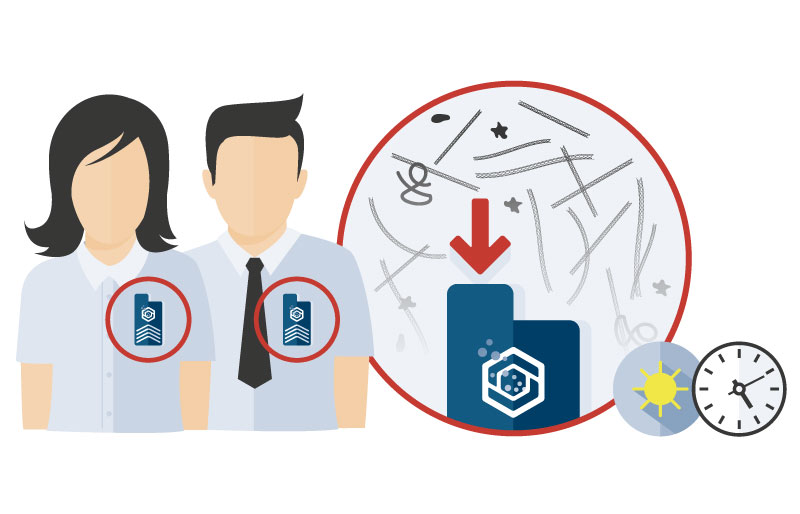
With the Identifier, each individual can wear a badge to monitor their personal exposure. Battery production safety can be further enhanced by monitoring different stages of production or various locations within a facility to determine potential “hot spots.”

Though battery power is seen as an eco-friendly alternative to fossil fuels, particularly when it comes to the automotive market, the materials used to make batteries have never been considered green. From the traditional lead to the latest nanomaterials and metal oxides, the danger remains and battery production safety requires being vigilant about worker exposure to the release of airborne battery materials.

The health risks of lead exposure have long been established. Unfortunately, many newer materials that are being used in high performance batteries are also harmful to human health. Some innovative materials are known carcinogens. The size, shape and structure of aerosol particles can determine how they affect human health. When aerosol particles are easily respirable, they can have terrible effects on the lungs and other organs.

Personal and Stationary Monitoring

At Stat Peel, we have developed a compact badge sensor and an integrated bench-top sized optical reader to monitor personal occupational exposure to nanocellulose fibers. It works in two steps:

1. The employees wear lightweight badges during their workday. The badge collects the respirable fraction of airborne nanocellulose fibers using an inertia-based size separator on a custom functionalized membrane.

2. At the end of a shift the badges are inserted into the reader, which selectively detects nanocellulose fibers using the most advanced Raman spectroscopy and reports and stores personal exposure.

Comprehensive Facility Monitoring

With a software upgrade our system can be used to monitor contamination sources across the whole manufacturing area.

Components

Aerosol monitoring, Components, Process- & wastewater inspection, Quality control tasks, Samplig Kits, Surface contamination

Sampling Badges for Identifier System

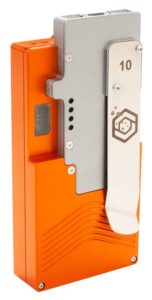
The badge

Badges can be worn by employees to monitor personal exposure, as well as placed in specific locations within a facility to monitor release. Each badge is about the size and weight of a phone, so it is easy to wear throughout the workday. There is a small opening that allows air to flow through to the filtration slide.

More Information
Components

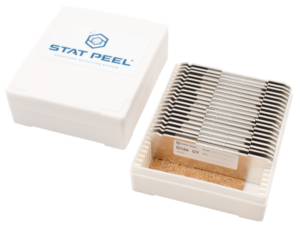
Filtration Slides

Filtration slides with specially developed membranes are used to gather particles from the filtered air. Each slide has one, two or three membranes to collect the respirable particle fraction. The appropriate number of membranes is determined by how “clean” a facility is. Each slide has a barcode so it can be traced to a certain user, and the slides can be archived to provide an additional record of compliance.

More Information